
How Does Wakesurfing Work?
Ever watched someone glide behind a boat on a surfboard—no rope, no ocean, just pure surf? That's wakesurfing, and it's simpler than you might think.
The short answer: A wakesurfing boat creates a wake large enough and powerful enough that a rider can surf it continuously, rope-free, just like catching an ocean wave.
Here's the catch: You need the right boat. Wakesurfing requires an inboard engine—outboards and sterndrives with exposed propellers are dangerous and off-limits. You'll use a rope to get up initially (just like wakeboarding), but once you're in the wake's sweet spot, you drop it and ride the endless wave.
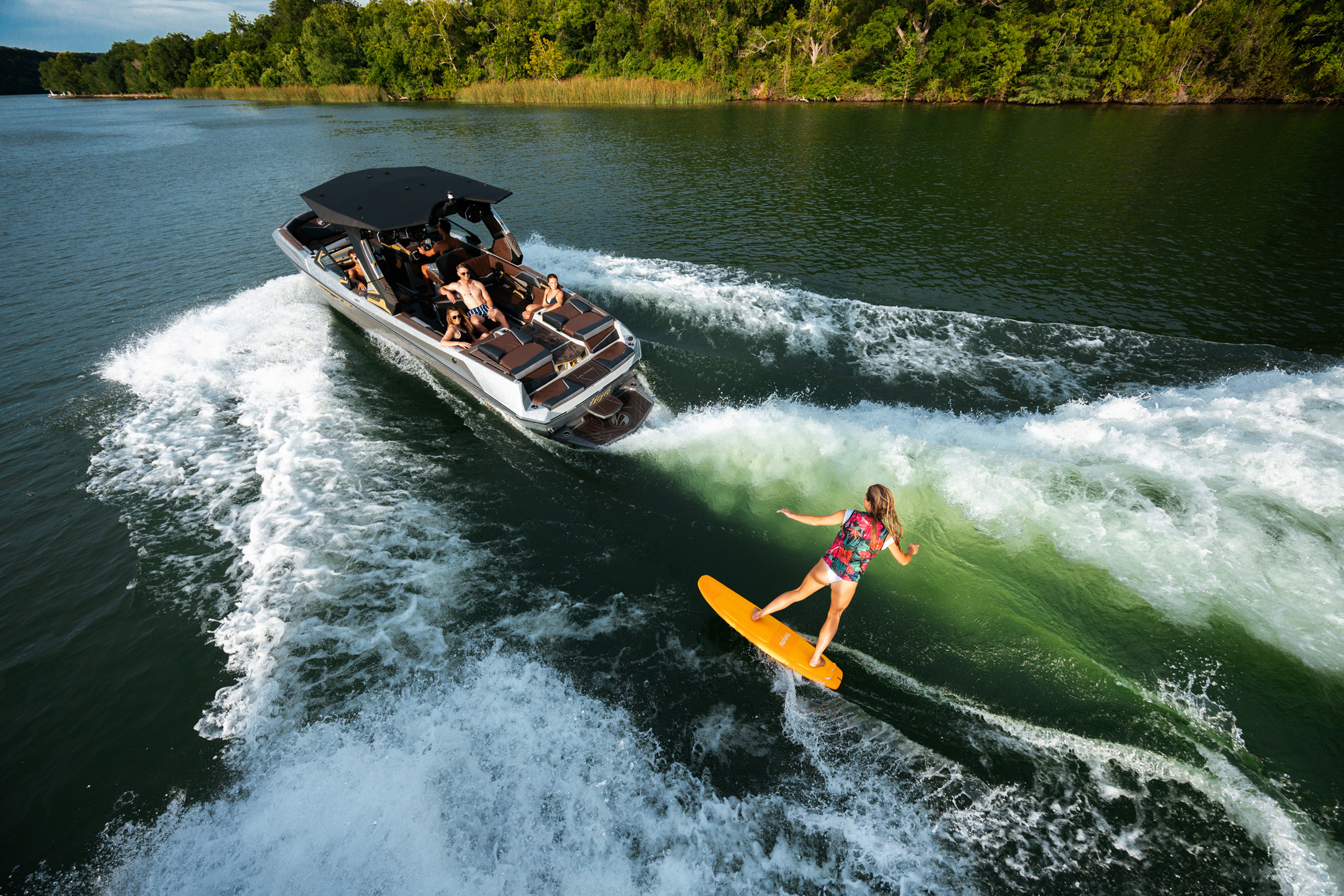
The Science Behind the Perfect Wakesurf Wave
Creating a surfable wake isn't magic—it's physics. Modern wakesurfing boats use several key systems working together to shape a wave that rivals ocean surf breaks. Here's what makes it possible:
Ballast: Adding Weight for Bigger Waves
Ballast is added weight that pushes the boat deeper into the water, dramatically changing the wake size and shape.
Gone are the days of cramming extra passengers or adding lead weights. Today's wakesurf boats use integrated ballast systems—onboard pumps that fill specially designed tanks with water from the lake itself. Want bigger waves? Fill the tanks. Ready to cruise to the dock? Empty them in minutes.
Most boats carry 2,000-4,000 pounds of ballast, strategically placed throughout the hull to dial in the perfect wave.
Running Attitude: Shaping the Wave's Profile
Running attitude refers to the angle your boat sits in the water while moving—and it directly impacts your wake's shape.
More weight in the stern = bow lifts, stern drops, wake gets taller and steeper with more push
Balanced weight = flatter running angle, longer and mellower wave
Modern wakesurf boats feature digital ballast controls that let you fine-tune tank levels from the helm, adjusting on the fly to match each rider's preference.
Trim systems like Tigé's TAPS (Tigé Adjustable Performance System) use a large hydraulic plate on the transom to instantly adjust the hull angle, working with Tigé's Convex V hull design to steepen or flatten your wave in seconds.
Surf Side Selection: Creating Clean Faces
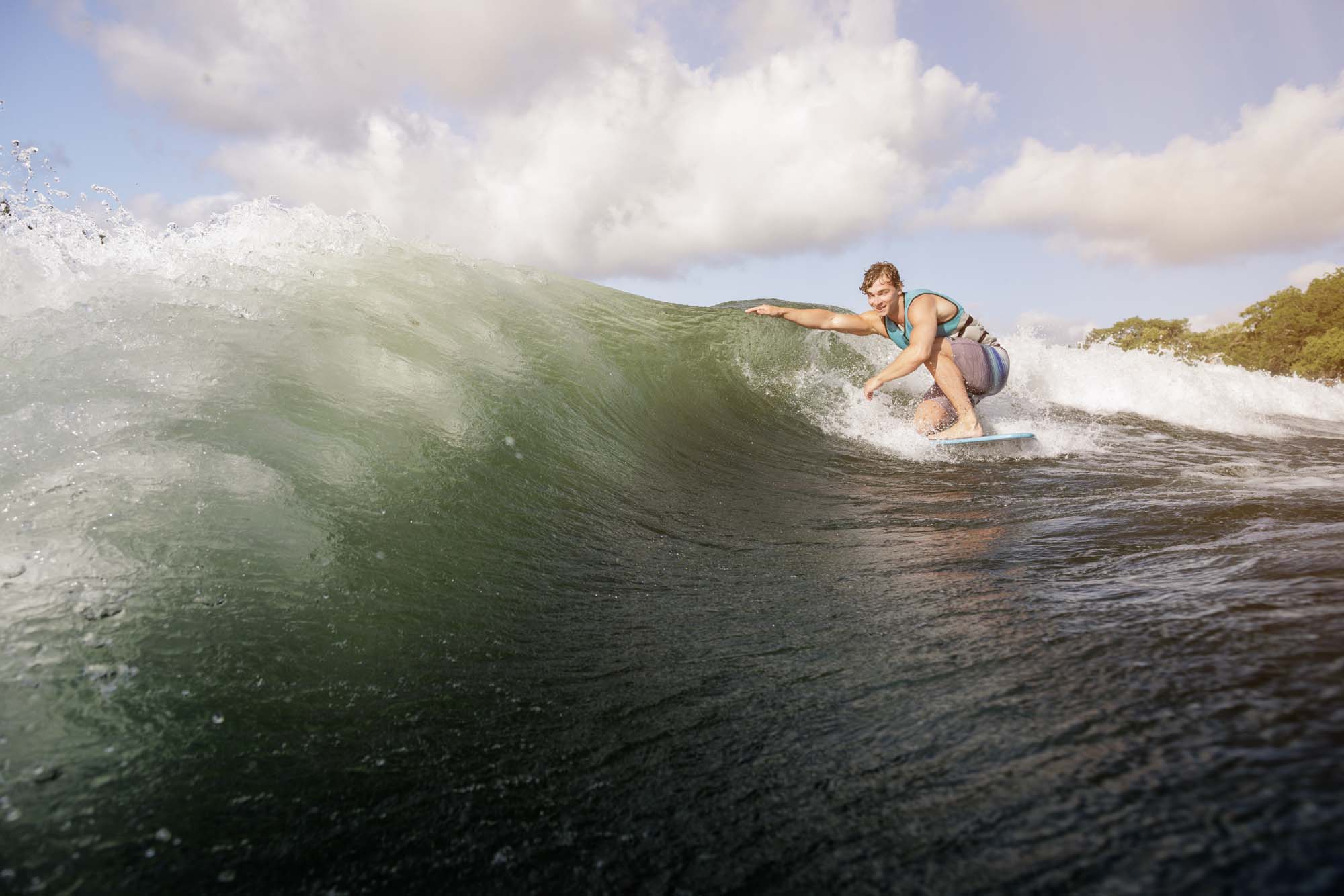
Here's where it gets interesting: listing the boat to one side transforms your wake into a proper surf wave.
By loading ballast heavier on one side (typically the rear quarter where the rider surfs), you create a pronounced lean that builds up one side of the wake while the other side washes out.
Advanced systems like Tigé's TAPS 3T take this further with adjustable wake plates on each side of the transom. Lower the port plate, the boat rolls to starboard—cleaning up the wave face, removing whitewater, and creating that glassy surface wakesurfers crave. These plates give you precision control to customize wave height, steepness, and length for different skill levels and riding styles.
Putting It All Together
The perfect wakesurf wave comes from combining these elements:
Ballast weight pushes the hull deeper for larger wakes
Weight placement and trim plates adjust the wave's length, steepness, and push
Side-to-side roll creates a clean, glassy face on your preferred surf side
Precise speed control keeps everything consistent throughout your session
Understanding how wakesurfing works is interesting—but actually riding that endless wave is where the real fun begins. Whether you're shopping for your first wakesurf boat or upgrading your setup, Tigé offers models at every price point engineered to deliver world-class surf.
Ready to dive deeper? Check out our Complete Guide to Wakesurfing for everything from gear selection to advanced riding techniques.