
Wakeboarding FAQs
Wakeboarding is one of the most fun and exciting ways to spend a day on the water — and one of the most accessible. Whether you're a first-timer trying to figure out how to get up or an intermediate rider ready to start hitting the wake, this guide answers some of the most common questions about wakeboarding. From gear and speed to wake setup and skill progression, here's everything you need to hit the water with confidence.
1. How hard is it to learn how to wakeboard?
Oftentimes, people find that getting up on a wakeboard is easier than wakesurfing because your feet are held in place where they need to be, eliminating the variable of trying to control your foot placement on the board as you’re getting up. While there is a learning curve, many people are up and riding within their first outing — even if it takes a few tries. The biggest hurdle is the initial pop out of the water, and once you crack that, everything else starts to click. Kids tend to pick it up especially fast. With the right boat speed, a patient driver, and a few tips in your pocket, getting up on your first day is very achievable.
2. What's the difference between wakeboarding and wakesurfing?
The biggest differences between wakeboarding and wakesurfing come down to speed, distance, and gear. Wakeboarding typically happens between 16–24 mph, with the rider towed on a rope 55–75 feet behind the boat, feet attached to the board with bindings. Wakesurfing happens at 10–12 mph, just 15–20 feet behind the boat, and you ride barefoot — the goal is eventually to drop the rope and surf the wave hands-free. Wakeboarding is more trick-and-air oriented, while wakesurfing tends to be more relaxed and social.
3. What kind of boat do I need for wakeboarding?
Any inboard towboat will get you up and riding, but wake-specific boats take the experience to another level. Features like integrated speed control, ballast, and Tigé’s GO System give you precise control over your wake shape and size — something a traditional ski boat simply can't offer.
4. What gear do I need to wakeboard?
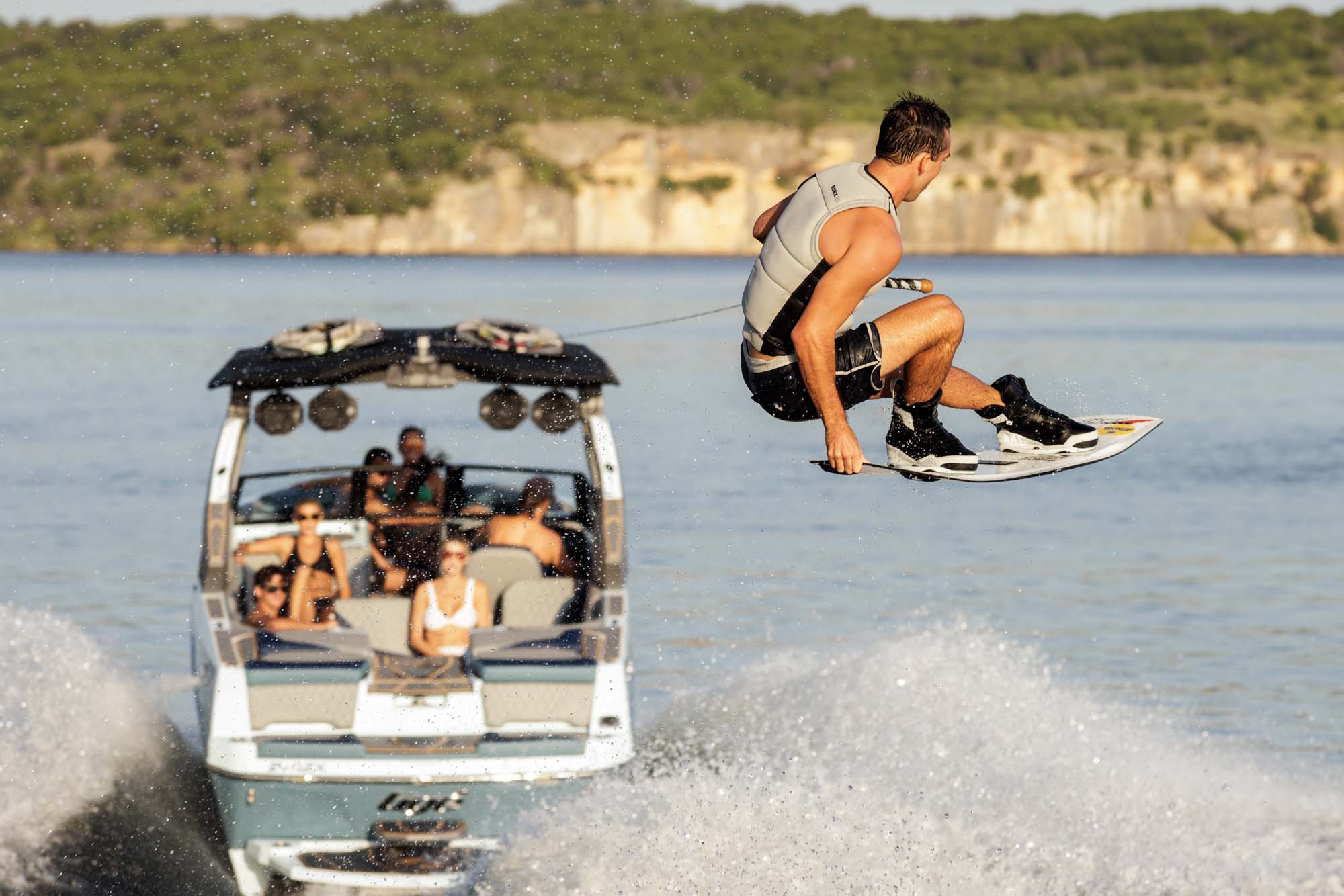
You'll need four things: a wakeboard, bindings, a tow rope, a life jacket, and something to tow you – preferably a Tigé Boat. 
Wakeboard & Bindings:
When buying a board, look for one sized to your weight — most manufacturers include sizing charts to help you find the right fit. Bindings (boots) should fit snug like a good pair of shoes. A secure, comfortable fit makes a big difference in control and confidence on the water.
Rope Length:
Rope length varies by skill level. Beginners typically start around 70 feet, which puts you in a comfortable spot for slower speeds. Intermediate riders usually ride between 65–70 feet—this will vary depending on personal preference for speed and the wake on the boat you’re riding. Advanced riders generally work in the 70-75-foot range, often riding a little bit quicker for more power and airtime on tricks.
Life Jacket:
A Coast Guard-approved life jacket is non-negotiable — fit it properly so it doesn't ride up in the water. If it feels snug, but you can still zip it up, it’s probably the right fit. Look for a vest designed specifically for watersports, as they're cut to allow full arm movement so you're not fighting your gear while you ride.
5. How do you stand up when wakeboarding?
This is the number one thing beginners get wrong: It's not a game of tug-of-war — don't try to pull yourself up or stand tall too soon. Instead, stay relaxed in a “cannonball” like position, keep your arms straight, and let the boat lift you up and on top of the water. Think of it like a friend is reaching down and pulling you up off the ground. Just sit back, relax, and trust the process.
6. How fast should you go when wakeboarding?
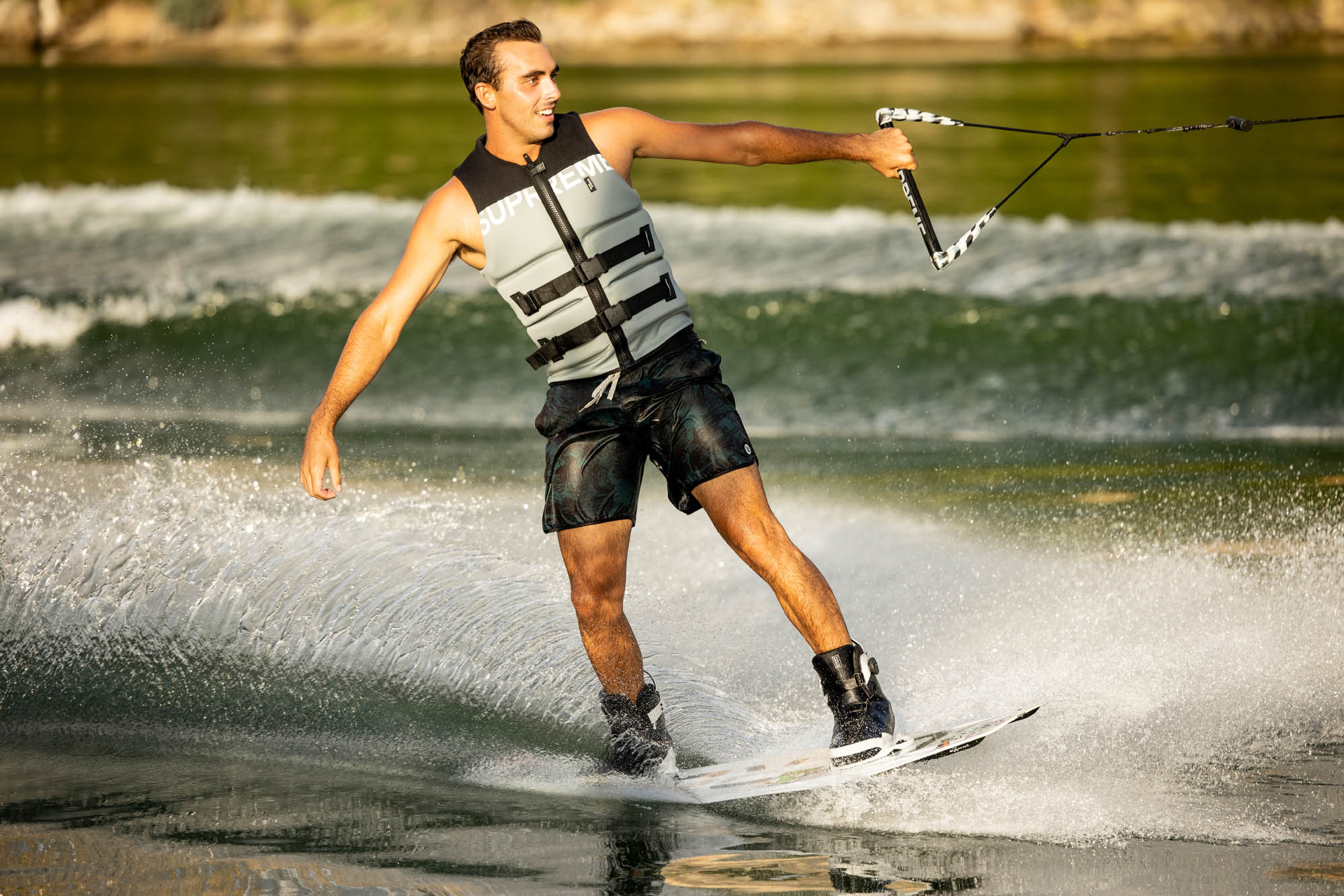
Speed depends on the rider. Beginners and kids do well at 10–16 mph — slower speeds mean smaller wakes and softer falls, which makes learning a lot less scary. Most adult riders settle into a comfortable groove between 16–22 mph as they progress. Pro-level riders hitting bigger tricks at the advanced level often push toward 22–24 mph to maximize wake pop. The right speed is the one that feels comfortable for the rider, not the one that looks impressive.
7. Do I need a huge wake to wakeboard?
Not at all — and often it's actually beneficial to keep the wake size manageable. While professional riders chase massive wakes, beginner to intermediate wakeboarders tend to have more fun and a more forgiving experience by not maxing out the ballast. Matching your wake to your skill level is key.
On a Tigé, staying under 17.5 mph in wakeboard mode keeps the TAPS plates deployed, minimizing the wake and making it much easier for a beginner rider to navigate. Riders looking to step it up can start filling more ballast, fine-tuning the wake shape to their liking, and bumping up speed from there.
8. How do I know when I'm ready to jump the wake?
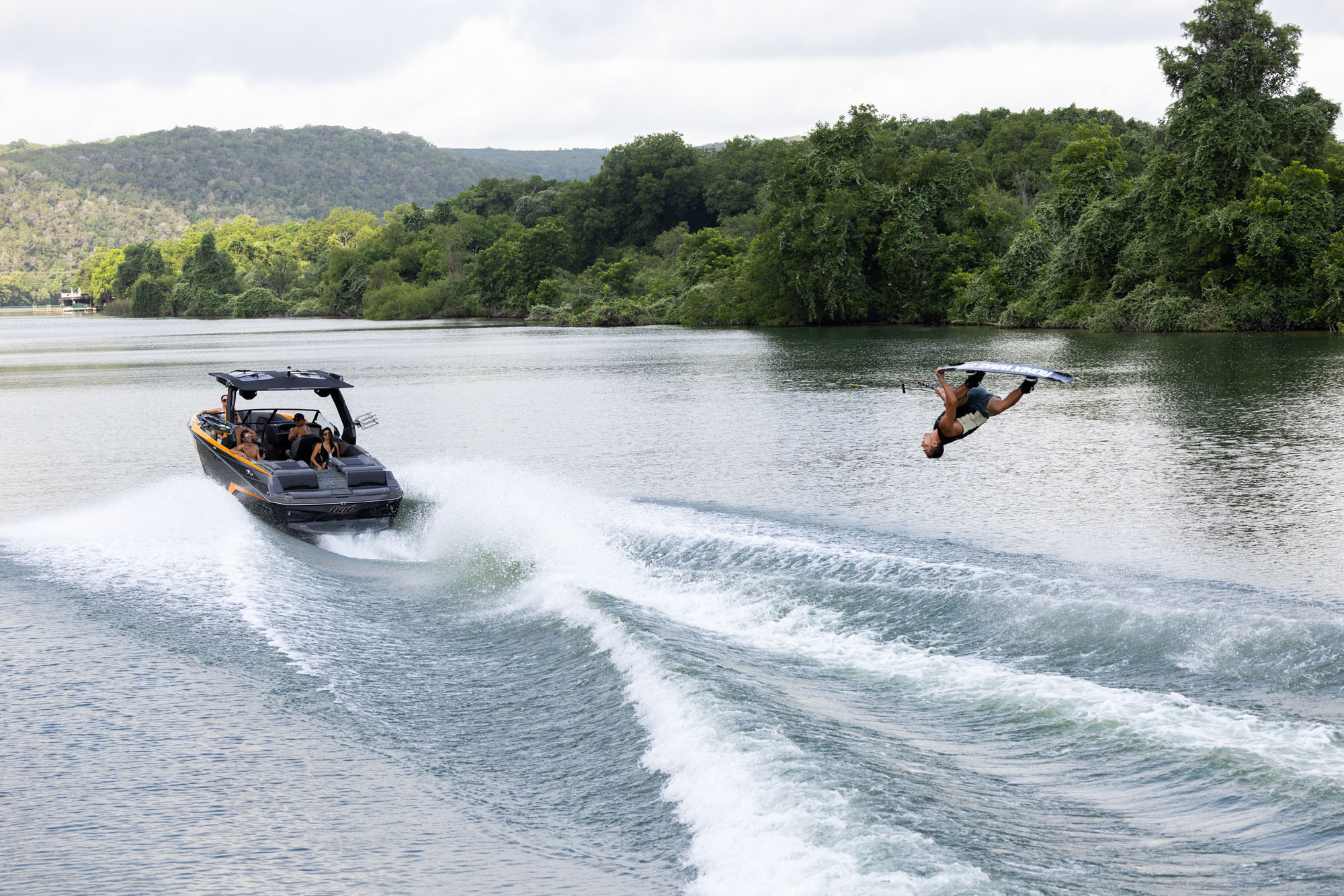
Once you can comfortably ride in a straight line, carve heel-side and toe-side, and cross the wake with control, you're ready to start thinking about jumps. The key is building to it gradually: start by riding up the wake's face and letting the momentum carry you into a small hop before committing to a full jump. When you do go for it, focus on edging through the wake (don't flatten out at the last second), standing tall at the top, and keeping your handle still in the air. Rather than trying to physically jump when you get to the wake, standing tall and edging through the wake will let the “ramp” shape of the wake put you into the air naturally. Don't rush it — a confident small jump beats a sketchy big one every time.
9. Can kids learn to wakeboard?
Yes! Kids are often faster learners than adults because they're less hesitant and naturally lower to the ground, which helps with balance. Start them slow (10–14 mph), use a shorter rope, and keep the wake small. A little encouragement goes a long way — most kids are up and riding within a session or two and having the time of their lives shortly after. Gentle boat driving and slow speeds go a long way towards ensuring kids have a fun experience.
10. What’s the difference between wakeboarding at a cable park vs. behind a boat?
Wakeboarding behind a boat and at a cable park are two different experiences:
Behind a Boat:
You’re pulled by an inboard wake boat, riding the wake it creates.
Offers smooth, consistent pull with predictable wakes for jumps, spins, and grabs.
Speeds are adjustable, usually around 16–24 mph.
Offers a great opportunity for bonding on the lake with friends and family.
At a Cable Park:
You’re pulled by an overhead cable system around a lake—no boat needed.
Features include ramps, rails, and kickers for park-style riding.
Continuous pull allows for more technical tricks on obstacles.
Great for riders who enjoy rails, park features, and a skate/snowboard-style vibe.
Creates the opportunity for repetition, as people will often spend a few hours riding laps around the cable in a single day.